Writing about what you don’t know

Writing about what you know is probably good advice for any writer. However, if you’re writing a series, sooner or later you are going to have to try something new. This happened to me by book six, Two Dogs. Part of this book, by necessity, had to be set in Paris so I was somewhat taken out of my comfort zone. In subsequent books, The Chancer and The Eight Bench Walk, I take the reader to the North-West of Ireland and then to Cyprus. I can’t say how well I’ve achieved this, as only the reader can judge that, but I’ve certainly had no adverse reviews as yet regarding the locations of my books.

Getting facts about a location wrong can seriously annoy your readers so let’s see what resources you can use to ensure that this doesn’t happen.

Continue reading

Why FOLO (fear of losing out) shouldn’t ever be an issue

I was prompted to write this after driving home from hospital the other day. My wife’s temporary residence there has meant me trying every route from home to hospital to find out which might be the best. There are three routes that I can take –

  • The motorway. This should be quickest but it rarely is as there are usually queues to get on and off at either end. These queues can be quite horrendous at rush hour so this option is chancy and can turn out to be the slowest by far
  • A narrow country road which can only be driven down slowly and is quite a few miles longer. However, there is very little queueing even at rush hours
  • A main road which runs alongside the motorway. A sort of halfway house, as it’s shorter in distance than the country road but it can still hit a queue at the end

So, one of these routes will be the optimum at any given time of day but which one?

Continue reading

My Top Ten crime movies

I was recently thinking about how movies have been a constant backdrop in my life and how crime movies, especially film noir, have contributed in leading me into a career in crime writing. There are loads of Top Ten lists around and I began wondering what my Top Ten of crime movies might look like. You can see them below and they are in no particular order.

Please note that I don’t claim that any of these are the best crime movies ever, they are just the ones that I like most.

Continue reading

Spring and it all starts again…

My cherry tree is in bloom again. I say ‘my’ but it doesn’t belong to me. It’s situated on the street just in front of my house and I must look at it at least thirty to forty times a day through my window while I’m resting my eyes from my computer screen. In winter, its just bare branches and for most of the summer its leaves are a quiet dark green but, at this time of the year, it literally bursts into blossom.

I know that its luscious pinky-red blooms will soon fade but, for me, this is the true start to the new year when life on our beautiful planet wakes itself up and says goodbye to the listlessness of winter.

Despite the daily drip, drip, drip of generally bad news about bad people doing horrendous things, my cherry tree lifts me up when I look out of my window. It is the promise of warm days, walking around in T shirt and shorts, sitting outside a coffee shop or a pub watching people go by and of brightness after the heavy dull overcast of winter.

It is also hope.

Continue reading

The recipe for a good murder mystery…

I’ve been reading one of Miguel Barclay’s cook books and I really like the simplicity of his recipes. The book is based on the notion that you can eat well for just one pound ($1.20) a portion but, besides the fact that they taste good and are nutritious, the real appeal for me is that all the meals are quite quick to cook. To explain, I used to love cooking and found it to be something of an antidote to the stress that had built up during a long working day and commute. I didn’t even mind if the recipe was complicated, it just gave me more time to unwind.

That was great when I had the energy or spoons to do it but now I’m finding that, by the time I’ve cooked the meal, I might not have enough energy left to enjoy it. So, Miguel, with his quick recipes, has helped to restore my love of cooking by allowing me to spend less energy in the kitchen thus allowing me to enjoy the eating part too. I was looking at one of his recipes yesterday and I started wondering what would be a good recipe for a crime story. This is my take on that…

Continue reading

I stand with Gary

For those of you who don’t live in the UK you might find this explainer useful. Gary Lineker is a former footballer, a great centre-forward, who played for Leicester, Tottenham and Barcelona amongst others. Since retiring from football, Gary became the presenter on Match of the Day, a football highlights programme that goes out every Saturday evening.

I have watched Match of the Day (commonly known as MOTD) religiously since it first started in the 1960’s and Gary is without doubt the best presenter it has ever had. Along with fellow pundits and strikers, Alan Shearer and Ian Wright, they are a fount of knowledge on all things football and a joy to watch and to learn from. Some of my readers will note that I even included it as the title in the seventh Mac Maguire mystery.

Continue reading

Do it yourself book covers – Part 4 – Ebooks and paperbacks

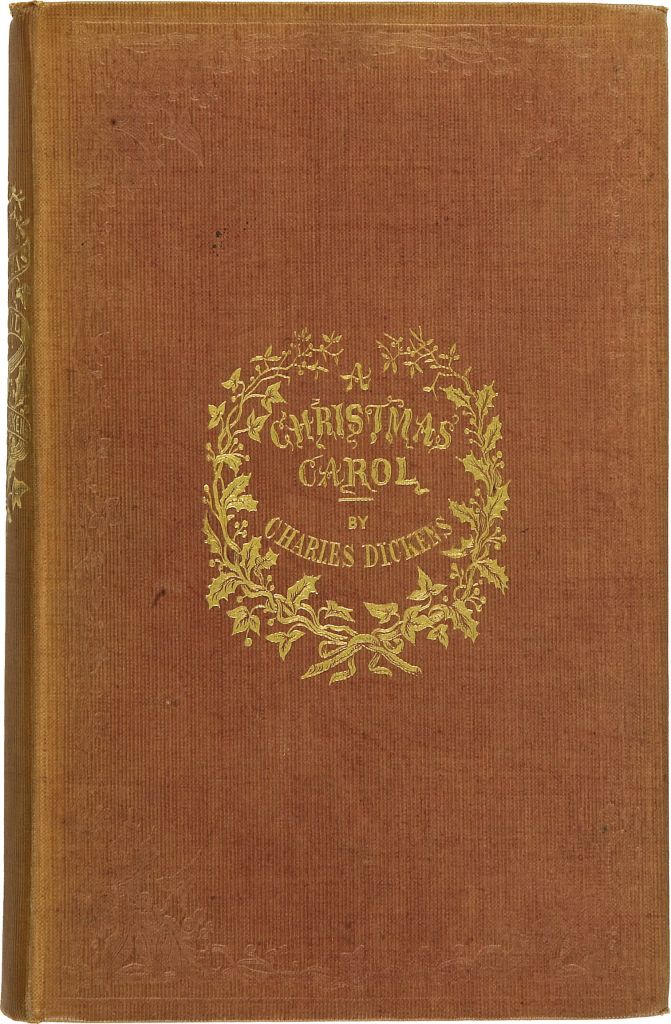
Once upon a time, books were precious objects and meant only for people who could afford them. They were mostly leatherbound and often with tooled gold leaf such as this first edition of Dicken’s classic Christmas novel. Books like these were put on display and were as much a status object as having fine paintings or furniture. Even more, perhaps, as it implied that their owners were of a sensitive and literate disposition.

Although a sort of dust jacket was in use as early as the 1820’s, it was a century later that they became ubiquitous. Publishers also found it cheaper to produce ornate dust jackets than ornate tooling and binding and so the book cover was born. Now, books became a display item in shops and visual information about the book was immediately available to a purchaser.

Paperbacks were being produced in the 1840’s in Germany so they are hardly a new idea. However, they took off in the 1940’s with Allan Lane’s Penguin books. These tended to be mostly reprints of existing titles but in the 1950’s the paperback revolution really kicked off with original titles being published en masse for the first time. These were books that just about everyone could afford and original genre fiction such as romance, science fiction, westerns and, of course, crime became wildly popular.

Continue reading

Do it yourself book covers – Part 3 – Using images

herat is a lonely hunter cover

While there are some book covers that don’t use images like the one on the left, I’d guess that these are in the minority. However, in this case, the stylised 3D font used in the title is a sort of image anyway. So, the first question you might want to ask is, does my book cover actually need an image? If the answer is yes then read on.

If you search in Amazon books for a particular genre and scroll down the covers then you will see that the huge majority of book covers use an image. If the search is for crime novels then you will also see that many of the covers are quite similar; dark colours with a solitary figure usually in silhouette. Of course, the plus point of this is that this is useful visual shorthand for telling the reader what genre they’re looking at. While I’ve read that putting a human figure on a cover sells books, I’ve never actually found any hard evidence to support this. There’s a lot of information out there about what makes the best cover and a lot of it is quite contradictory. So what’s the best course to take?

I’ve honestly got no idea. Anything I say in these posts is just my take but, for me, my covers are an integral part of the book. While I obviously want people to read my books, none of them have been written with commercial considerations in mind. I’ve just tried to write the stories that come to me as best I can. I feel the same about my covers. I don’t want a gloomy cover with a solitary figure unless that’s what I feel the story needs. If you look at my covers, you can see that they’re all quite different but, hopefully, they all reflect something of the story inside. I’ll use three examples to illustrate this.

Continue reading

Do it yourself book covers – Part Two – How to compile your cover

You might wonder at the word ‘compile’ being used in this context. After all, it means ‘ to collect information in order to produce a list or a book‘ or, indeed, a crossword. However, I think that it’s quite appropriate as every book cover can be viewed as something of a puzzle.

Firstly, I’d like to demystify the art of producing book covers a little. Many writers think that this involves some dark technical arts and skill sets that they could never achieve. They are wrong on both counts. When I worked at the BBC, I was for the most part embedded in web design teams. These teams would be self-contained and have all the skills required to produce a state of the art website, in this case BBC Sounds. The team was comprised of coders and designers but also others who looked at the structure of the website and who were responsible for turning audience data into better websites.

The designers I worked with fascinated me. For all the high tech available, they most often selected the simplest techniques to get where they wanted to go. Pencil sketches and sticky notes for the most part and only towards the end, when the designs needed to be formalised, did they start using software. Even then, it would sometimes be relatively simple software. I learned that not all designers are experts at Photo Shop and the like.

Continue reading

Do it yourself book covers – Part One – Introduction

When I published my first book, I was lucky in that I knew someone who was a talented graphic designer. I gave him a brief and he came back to me with some wonderful images. This worked fine until the designer was no longer available and I was faced with a dilemma. Get a new designer or do it myself. I opted for the latter.

You might think that this was a bit presumptuous of me, after all I’m a writer not a designer. However, I had worked at the BBC for nearly fifteen years with some of the best designers around and a fair bit of it was bound to rub off on me. So, every cover since book nine – The Tiger’s Back – has been done by me. It’s not up to me to judge my own work but I get my readers, who sanity check my books before publication, to also comment on the covers. So far, so good.

But it’s a lot of work and what do I really get out of it?

Continue reading